
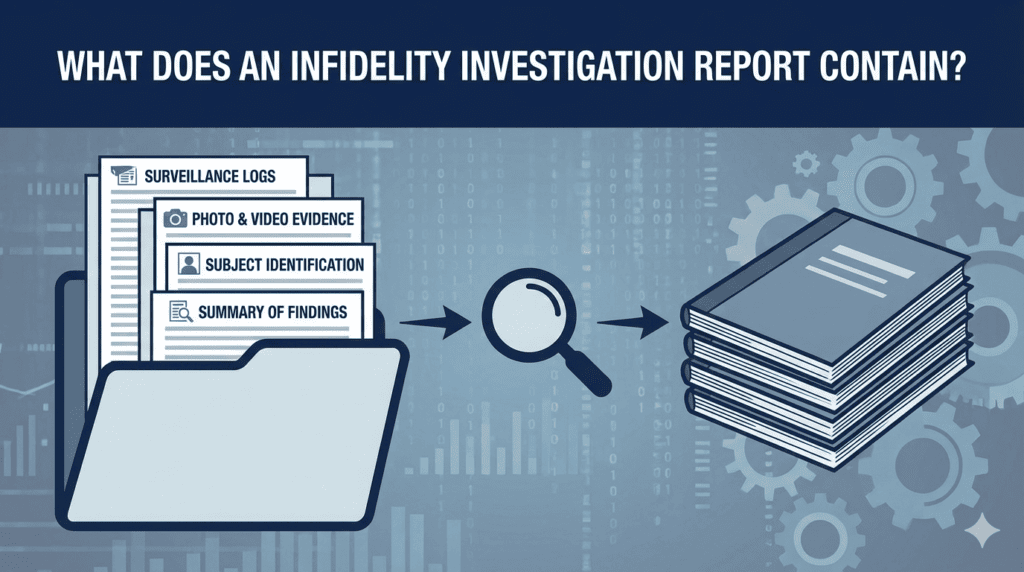
For many clients—especially Kenyans in the Diaspora—the most important question is not just how an investigation is conducted, but what the final report actually looks like.
An infidelity investigation report is the formal outcome of the investigative process. It is the document clients rely on to make informed personal, legal, and financial decisions. Understanding its structure helps set realistic expectations and highlights why professional reporting standards matter.
This article explains what an infidelity investigation report typically contains, how it is prepared, and how it may be used.
Purpose of an Infidelity Investigation Report
A professional investigation report is designed to:
- Present verified facts clearly and objectively
- Document observations made during the investigation
- Provide a chronological account of relevant activities
- Support decision-making without speculation or emotion
It is not intended to embarrass, accuse, or provoke confrontation.
Core Components of an Infidelity Investigation Report
While formats may vary slightly, a professionally prepared report generally includes the following sections.
1. Case Overview and Objectives
This section outlines:
- The purpose of the investigation
- The scope and duration
- The instructions received from the client
It clarifies what the investigation set out to establish, helping readers understand the context of the findings.
2. Subject Background (Limited and Relevant)
This section contains only information necessary for context, such as:
- General description (without excessive personal detail)
- Known routines relevant to the investigation
- Locations or areas observed
Sensitive personal data is handled cautiously and lawfully.
3. Methodology Used
A key feature of a professional report is transparency about how information was obtained.
This section may describe:
- Observation methods used
- Duration and timing of surveillance
- General approach (without compromising investigator safety)
Clear methodology strengthens credibility, especially where legal review may follow.
4. Chronological Observations
This is the core of the report and typically includes:
- Date-by-date activity summaries
- Time-stamped observations
- Locations visited
- Noted interactions in public settings
The focus is on observable facts, not interpretations or assumptions.
5. Supporting Documentation
Where legally permissible, reports may include:
- Photographic documentation
- Observation logs
- Movement timelines
All supporting material is referenced clearly and linked to specific observations.
6. Analysis and Findings
Professional investigators may provide limited analytical observations, such as:
- Identified patterns of behaviour
- Consistency or inconsistency with stated routines
This section avoids moral judgment or emotional conclusions. The emphasis remains factual.
7. Limitations of the Investigation
An ethical report acknowledges limitations, such as:
- Periods not observed
- Environmental constraints
- Factors beyond investigative control
This transparency enhances trust and prevents overreliance on incomplete information.
8. Conclusion and Summary
The report concludes with:
- A concise summary of key findings
- Restatement of whether objectives were met
- Clear separation of fact from inference
No recommendations about personal action are imposed on the client.
What a Professional Report Does NOT Contain
To manage expectations, a professional infidelity investigation report does not include:
- Emotional language or accusations
- Opinions on guilt or morality
- Illegal recordings or intercepted communications
- Hearsay from third parties
This distinction protects both the client and the integrity of the report.
Importance of Reporting Standards for Legal Use
For clients considering legal advice or divorce proceedings, reporting standards matter greatly.
Well-prepared reports:
- Are easier for advocates to review
- Reduce the risk of evidentiary challenges
- Demonstrate lawful and ethical conduct
Poorly prepared reports can undermine otherwise valid findings.
Special Considerations for Clients Living Abroad
For overseas clients, reports are often:
- Delivered securely in digital format
- Structured for clarity without in-person explanation
- Designed to be reviewed remotely and shared with legal counsel if required
Professional reporting bridges the distance between client and investigator.
Why Professional Reporting Matters
The value of an infidelity investigation lies not only in what is discovered, but in how it is documented.
Professional reporting:
- Protects client interests
- Preserves objectivity
- Supports informed decision-making
- Maintains legal and ethical integrity
Learn More About Professional Investigations in Kenya
If you are considering an infidelity investigation in Kenya—particularly from abroad—it is important to understand both the process and the final deliverables.
👉 Learn more about our Infidelity Investigations in Kenya for Kenyans in the Diaspora, including how findings are documented and reported.
Ultimate Forensic Consultants Ltd
Private & Corporate Investigations | Forensic Services