
🔥 Electrical Fires vs Arson: How Investigators Tell the Difference
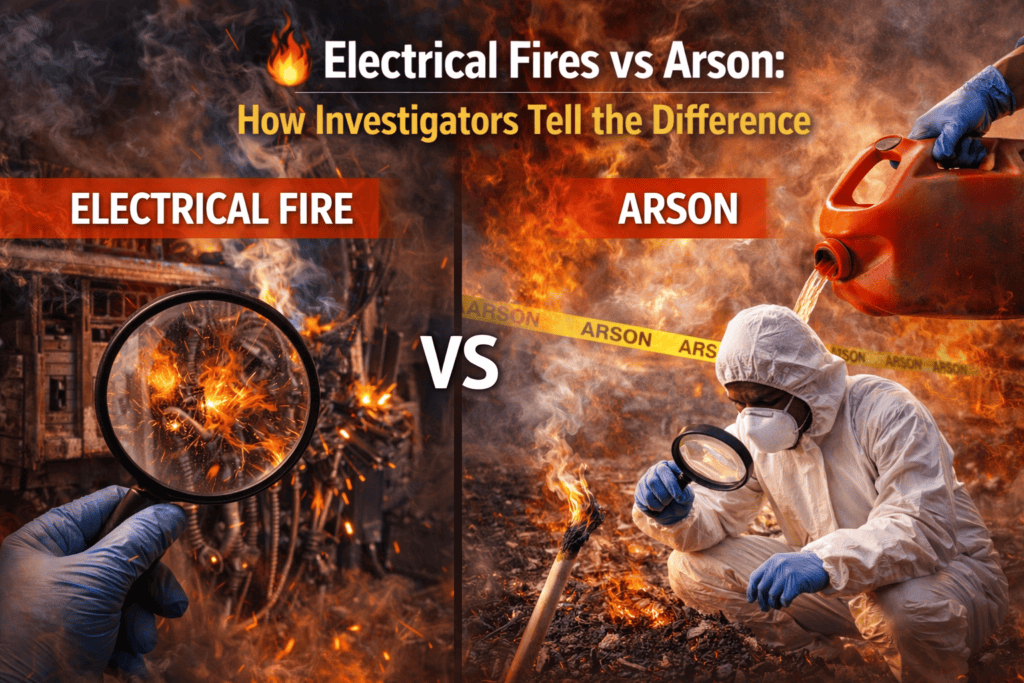
When a fire occurs in Kenya, two explanations are often raised almost immediately:
“It was an electrical fault” or “It was arson.”
These two causes carry very different legal, insurance, and criminal implications, yet they are frequently confused or wrongly assumed. From a forensic perspective, electrical fires and arson leave very different evidence behind.
This article explains how professional fire investigators distinguish between the two—using science, not speculation.
Why the Distinction Matters
Correctly identifying whether a fire was electrical or deliberate affects:
- Insurance claim approval or rejection
- Criminal liability
- Civil lawsuits and compensation
- Corporate risk exposure
- Reputation and regulatory scrutiny
In Kenya, many insurance and court disputes arise because the fire cause was incorrectly classified at the outset.
Common Misconception: “Burnt Wires Mean Electrical Fire”
One of the biggest myths in fire investigations is that melted or burnt wiring automatically means an electrical fire.
In reality:
- Most fires damage electrical wiring after ignition
- Fire heat can cause wires to melt, sag, or short even if electricity did not cause the fire
Forensic investigators must determine whether the electrical system caused the fire or was merely a victim of it.
How Investigators Analyze Electrical Fires
Electrical fires typically originate from failures within the electrical system itself.
Key forensic indicators of electrical fires include:
- Evidence of electrical arcing at the point of origin
- Overloaded circuits or undersized wiring
- Faulty breakers or missing protective devices
- Improper or illegal electrical installations
- Localized ignition near electrical components
Investigators also assess whether the electrical fault preceded the fire, not occurred as a result of it.
Understanding Electrical Arcing (Critical Evidence)
True electrical arcing:
- Occurs before fire ignition
- Leaves distinct metallurgical signatures
- Is localized and consistent with ignition patterns
Post-fire arcing:
- Occurs after fire exposure
- Is caused by insulation failure due to heat
- Does not indicate the fire started electrically
Distinguishing between the two is a core forensic skill.
How Arson Is Forensically Identified
Arson is never concluded based on suspicion alone. It must be supported by physical and circumstantial evidence.
Common forensic indicators of arson include:
- Multiple points of origin unrelated to fire spread
- Fire patterns inconsistent with accidental ignition
- Evidence of accelerants (where applicable)
- Fire starting in areas without electrical sources
- Signs of forced entry or scene manipulation
- Fire occurring under suspicious timing conditions
Each indicator is assessed within the totality of evidence, not in isolation.
Electrical Fires vs Arson: Key Forensic Differences
| Factor | Electrical Fire | Arson |
|---|---|---|
| Point of origin | Near electrical systems | Often multiple or illogical locations |
| Burn patterns | Consistent with heat rise | Often inconsistent or forced |
| Wiring damage | Pre-fire arcing evidence | Post-fire damage only |
| Ignition source | Electrical failure | Human action |
| Insurance impact | Often covered | Often excluded |
| Criminal implications | Usually none | Potential prosecution |
The Role of Scene Reconstruction
Investigators reconstruct:
- Fire development timeline
- Ventilation effects
- Fuel load behavior
- Heat release patterns
If the reconstruction cannot support an electrical ignition, that cause is eliminated—regardless of initial assumptions.
Why Initial Opinions Are Often Wrong
Early opinions may be flawed due to:
- Limited access during emergency response
- Scene contamination
- Pressure to explain losses quickly
- Lack of forensic training
This is why insurers and courts increasingly rely on independent forensic fire investigators for high-stakes cases.
Insurance Implications in Kenya
Electrical fires are often covered under standard fire policies.
Arson, especially by or connected to the insured, is usually excluded.
A misclassification can:
- Wrongly deny a legitimate claim
- Wrongly approve a fraudulent claim
- Trigger unnecessary litigation
Accurate forensic determination protects both insurers and policyholders.
Can Electrical Fires Be Mistaken for Arson?
Yes — and it happens frequently.
Indicators such as:
- Severe damage
- Rapid fire spread
- High temperatures
Can occur in both electrical fires and arson cases. Only forensic analysis can reliably distinguish them.
When Should a Forensic Fire Investigator Be Engaged?
Early engagement is critical when:
- Cause is disputed
- Insurance claim value is high
- Arson is alleged
- Legal action is anticipated
- Electrical faults are blamed without proof
The earlier the investigation, the stronger the evidence.
Fire Investigation Services in Kenya
Professional forensic fire investigations help:
- Determine true fire causes
- Resolve insurance disputes
- Support court proceedings
- Protect reputations and assets
👉 For full scope and methodology, see our main guide on Forensic Fire Investigation Services in Kenya.
Final Thought
In fire investigations, assumptions are dangerous.
Only forensic science can reliably distinguish between an electrical accident and deliberate fire setting—and that distinction often determines financial and legal outcomes.
🔥 Electrical Fires vs Arson: How Investigators Tell the Difference Read More »
Uncategorized