
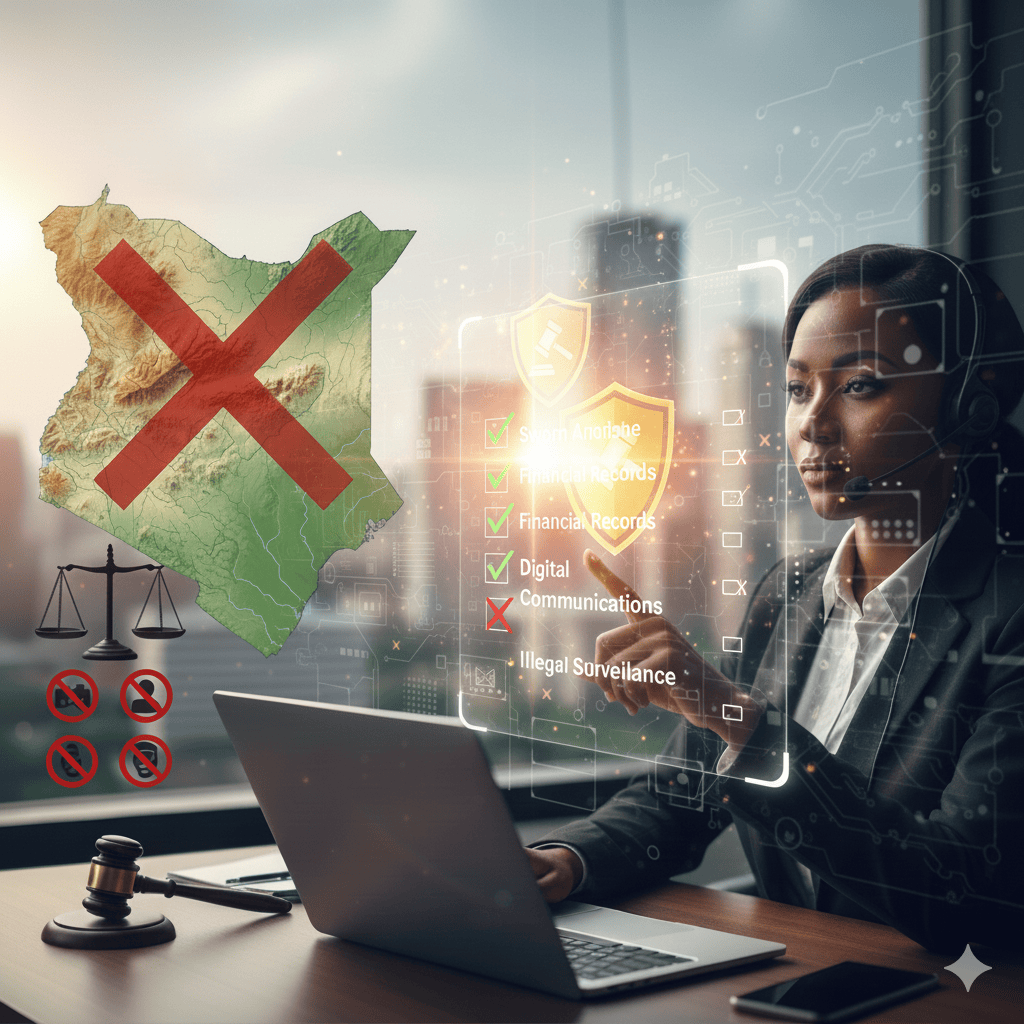
Divorce proceedings in Kenya are often emotionally and financially significant, particularly where allegations of infidelity are involved. Many individuals—especially Kenyans living abroad—consider hiring a private investigator to establish facts before making legal decisions.
A common and important question arises:
Can evidence gathered by a private investigator be used in Kenyan divorce cases?
The answer is nuanced. This article explains how Kenyan courts view private investigation evidence, what makes it usable, and what limitations clients must understand.
Understanding Divorce Proceedings in Kenya
Divorce in Kenya is governed primarily by the Marriage Act, 2014, and is handled by courts that focus on:
- Proof of the breakdown of marriage
- Conduct of the parties
- Welfare of children
- Fair division of matrimonial property
While infidelity alone is not always decisive, evidence of conduct can be relevant and influential, depending on the circumstances of the case.
What Type of Evidence Is Generally Acceptable in Court
Kenyan courts are concerned less with who collected evidence and more with:
- How the evidence was obtained
- Whether it is lawful
- Whether it is relevant and reliable
Evidence may be considered if it:
- Was obtained without violating constitutional rights
- Does not involve illegal interception or intrusion
- Can be explained and supported factually
Illegally obtained evidence risks being excluded and may expose parties to legal consequences.
Evidence Commonly Gathered by Private Investigators
When conducted lawfully, private investigators may produce:
- Observation reports of activities in public places
- Time-stamped photographic documentation
- Chronological activity logs
- Verification of routines and associations
Such material may assist advocates in building or supporting a narrative, but it does not automatically determine the outcome of a case.
The Importance of Lawful Evidence Collection
Kenya’s Constitution guarantees the right to privacy, which courts take seriously.
As a result:
- Phone tapping is illegal
- Accessing private messages or emails without authority is unlawful
- Secret audio recording of private conversations may be prohibited
- Trespass onto private property invalidates evidence
Evidence obtained through unlawful means may be rejected outright and can weaken a party’s case.
How Private Investigation Evidence Is Typically Used
Private investigator evidence is often used:
- To support affidavits
- To corroborate testimony
- To guide legal strategy
- To assist advocates in advising clients
It is rarely used in isolation. Courts evaluate evidence in context, alongside witness statements and other materials.
Can a Private Investigator Testify in Court?
In some cases, an investigator may be called to:
- Explain how observations were made
- Clarify methodology
- Authenticate reports or documentation
However, investigators are not expert witnesses on marital issues. Their role is limited to factual observation, not opinion or judgment.
Special Considerations for Kenyans Living Abroad
For diaspora clients, private investigations are often conducted before divorce proceedings begin.
Professional investigations can help by:
- Providing clarity before filing
- Preventing reliance on rumours
- Helping advocates assess the strength of a case
However, overseas clients must be cautious not to request actions that could breach Kenyan law, even if such actions may be permissible elsewhere.
Why Courts Focus on Process, Not Emotion
Courts are not interested in drama or confrontation. They focus on:
- Facts
- Lawful conduct
- Credibility of evidence
Evidence gathered professionally and ethically is more likely to be considered seriously than information obtained informally or emotionally.
Working With Investigators and Advocates Together
The best outcomes often occur when:
- Investigations are conducted lawfully
- Findings are shared with a legal advocate
- Legal advice guides how evidence is presented
Private investigators support the fact-finding stage, while advocates determine legal strategy.
Key Takeaways
- Evidence from a private investigator can be relevant in Kenyan divorce cases
- Lawful collection is essential
- Illegally obtained evidence may be excluded
- Reports support legal strategy but do not decide cases alone
Professional investigations aim to inform decisions, not replace the court’s role.
Learn More About Lawful Investigations in Kenya
If you are considering a divorce or need clarity before taking legal steps, it is important to rely on lawfully obtained, professionally documented information.
👉 Learn more about our Infidelity Investigations in Kenya for Kenyans in the Diaspora and how we work within legal and ethical boundaries.
Ultimate Forensic Consultants Ltd
Private & Corporate Investigations | Forensic Services